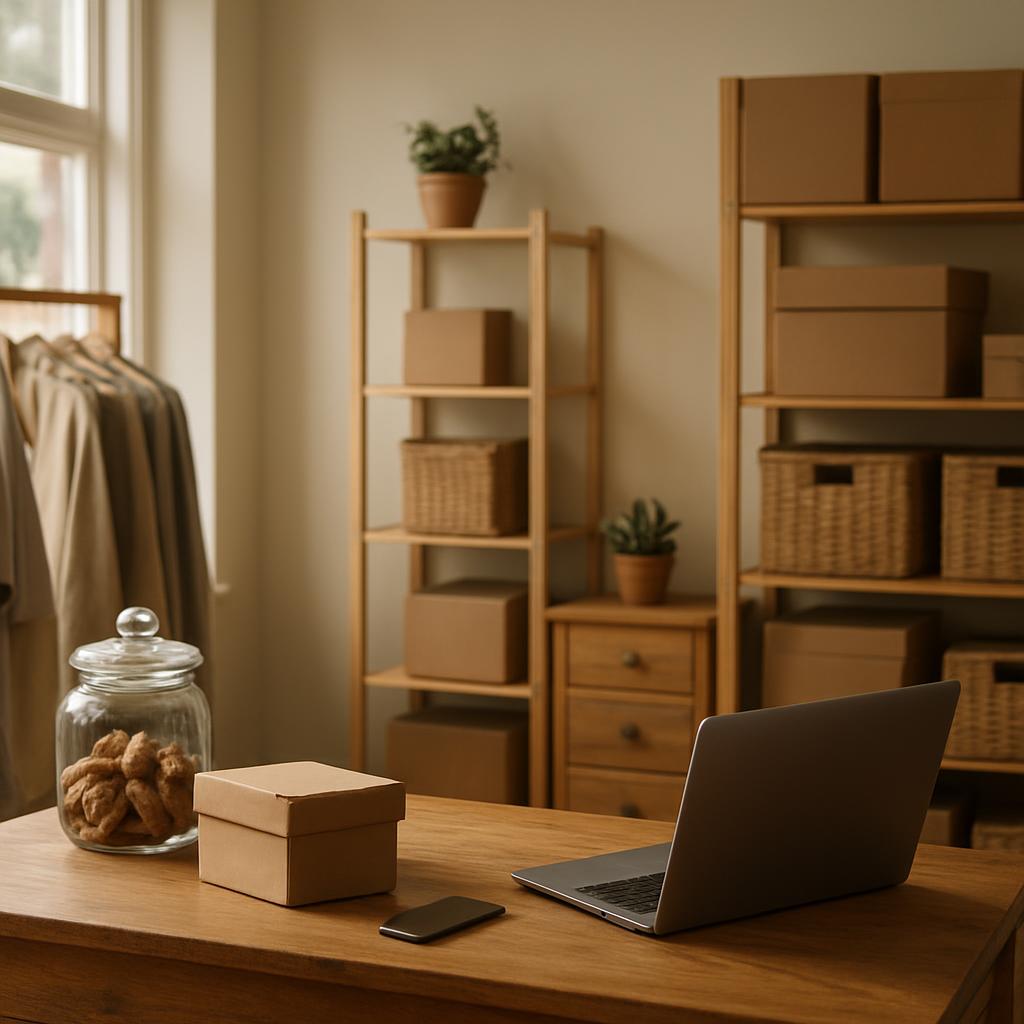
What Cleadon Businesses Know About Storage
Find Out More →Walk past the light industrial units scattered around Cleadon, and you'll notice something: the ones that run smoothest tend to be the ones with storage sorted. Not just 'storage somewhere', but storage done deliberately. They label things. They rotate stock. They know exactly what they've got and where. Homeowners rarely think that way — and that's probably why their spare rooms end up as dumping grounds instead.
The good news is that borrowing a few habits from local Cleadon businesses doesn't require much effort. It just requires thinking about storage the way they do: as something you plan for, not something you tolerate.
Why businesses treat storage like a system (and homeowners don't)
The difference comes down to one thing: for a business, wasted space is wasted money. When you're running a small operation from a unit in Cleadon, every square foot has a cost attached to it. That forces clarity. You can't afford to store things 'just in case' or hold onto stock you've forgotten about.
Homeowners don't have that same pressure, so we end up keeping things we don't really need, storing them badly, and then wondering why we're drowning in clutter. A business that uses self-storage has typically already thought through what's worth keeping, how long it needs storing, and when they'll actually need it again. They've also usually got a rough inventory system — even if it's just written notes — so nothing gets lost to the back of a unit.
You don't need to run your home like a warehouse, but that discipline is worth stealing. If you're thinking about using self-storage for seasonal items, overflow from a house move, or things you're holding onto temporarily, start by being honest about what actually needs storing and for how long. That alone will save you money and frustration.
How they maximise space without cramming everything in
Here's where local businesses really differ from the average homeowner. They don't just shove things into a storage unit and hope. They think about access, stacking, and retrievability from day one.
This means: heavy items at the base, lighter ones higher up. Boxes labelled clearly with content and date. Frequently needed things near the front. Fragile or temperature-sensitive stock protected properly. If they need to get to something in the middle of a stack, they don't want to dismantle their entire unit.
For a household, this translates to packing smarter. If you're storing things seasonally — garden furniture in winter, Christmas decorations off-season, that sort of thing — pack by season or category, label everything legibly, and keep an actual list of what's in there. It sounds fussy, but you'll genuinely use things more if you can find them without excavating. You'll also know if something's damaged before it sits there for months.
One more thing businesses get right: they use the vertical space. Don't just fill a unit horizontally and call it done. Shelving, pallets, or even just stacking boxes more strategically can double what you're able to fit. As we covered in this guide on getting real value from storage, how you pack matters as much as how much you pack.
They monitor what they're actually using
This is the brutal bit that separates working storage from expensive procrastination. Businesses review their stored stock regularly. If something's been sitting there for six months and hasn't moved, they ask themselves why they're paying for the space. Either it moves, it sells, or it goes.
Households almost never do this, which is why self-storage can become a graveyard for things you've convinced yourself you'll use one day but almost certainly won't.
Before you sign up for self-storage, ask yourself: will I actually come back and retrieve this? And be honest. If you're storing furniture from a flat you've left, that's legitimate — you're between places. If you're storing seventeen boxes of 'stuff I might need', you're probably just renting expensive space to avoid making a decision.
That said, there are genuine reasons Cleadon residents use self-storage, and if your reason is solid, tracking what you've got costs nothing. A simple spreadsheet or even notes on your phone saying 'unit contains: winter clothes (2 boxes), camping gear (1 tent, 1 sleeping bag set), garden storage cabinet' takes ten minutes and saves hours of confusion later.
They know what it should cost them
A business doesn't pay for storage without knowing roughly what it costs. They calculate it into their overheads. They shop around. They know whether they're getting value or being overcharged.
Most homeowners, by contrast, vaguely remember the monthly fee, pay it, and don't think about it again. Then six months in they're surprised at the total they've spent.
If you're going to use self-storage, spend twenty minutes finding out what a realistic price looks like. Understanding costs upfront helps you make an actual decision, not just drift into a unit because it seemed like a good idea on the day. Our breakdown of what storage actually costs in Cleadon walks through the real figures, so you're not guessing.
What to take away
You don't need to turn your home storage into a business operation. But you do benefit from thinking like one. Know what you're storing and why. Pack it thoughtfully. Label it. Check on it occasionally. Understand the cost. And be ruthless about things that aren't earning their space.
If you've got a genuine need for extra space — a house renovation, a move between homes, seasonal items that don't fit in the house — then Self Storage Cleadon can be exactly the right solution. Just approach it with the same clarity that local businesses bring to their storage. That's the difference between storage working for you and storage becoming an expensive habit.
Looking for Self Storage near Cleadon?
We have secure, flexible units available in the area. Get in touch with Self Storage Cleadon today.
Find Out More →